• Skip to main content
  • Skip to primary sidebar
  • Skip to footer
  • All Posts
  • Contact

Time Restricted

Experiences with Time-Restricted Eating and Managing Chronic Disease

Posts

Myth busting

September 4, 2018 By spao Leave a Comment

Gradual weight loss efficacy is a myth…

Do you believe any of the following?

  • Exercising over time produces cumulative weight loss based on calories in versus calories out
  • Setting realistic weight loss goals is important to keep people motivated
  • Losing weight gradually (1-2 lbs per week) creates more sustainable weight loss

If so, you are not alone!

The problem is these commonly held beliefs are actually myths that persist despite refuting evidence.

I would encourage you to read an interesting article “Myths, Presumptions, and Facts about Obesity” from the prestigious New England Journal of Medicine, January 31, 2013.

Using more rigorous studies, the article cites evidence of actual observations, not assumptions.

Some excerpts:

  • The body actually compensates for sustained calorie inputs or outputs; it’s not calories-in / calories-out for weight loss

For example, whereas the 3500-kcal rule predicts that a person who increases daily energy expenditure by 100 kcal by walking 1 mile (1.6 km) per day will lose more than 50 lb (22.7 kg) over a period of 5 years, the true weight loss is only about 10 lb (4.5 kg)…

  • “Realistic” weight loss goals do not help

Indeed, several studies have shown that more ambitious goals are sometimes associated with better weight-loss outcomes…

…

Furthermore, two studies showed that interventions designed to improve weight-loss outcomes by altering unrealistic goals resulted in more realistic weight-loss expectations but did not improve outcomes.

  • Losing weight fast is more effective in the long-run than losing weight gradually

Within weight-loss trials, more rapid and greater initial weight loss has been associated with lower body weight at the end of long-term follow-up.

There are even more results in this analysis, including myth busting surrounding the number of calories expended during sexual intercourse!  (I won’t give you the answer here!)

So why do these myths continue?

Net is that we don’t force scientific method and evidence-based rigor into our beliefs.

We are influenced by:

  • repeated media exposure to claims
  • cognitive dissonance – we don’t like to hear contradictory evidence to ideas that are important to us
  • confirmation bias – we only seek data supporting claims we have already accepted as true
  • ability to be swayed by persuasive (yet fallacious) arguments

Topics related to weight loss and obesity aren’t the only areas where these factors influence us.

Read the article and be careful what you believe in!
Filed Under: Fasting, Featured

High School weight

September 3, 2018 By spao 4 Comments

Days 9-11 – Halfway done and back to high school weight

My wife and I are still doing well!  Right now, the forecast is 22 days of fasting — 28 days less arrival day, digestive rest day, and 4 refeeding days.  This means we’re halfway there!

The other way to think about it is that we’ve now survived 5 enemas!  😱  The enemas don’t really get any more comfortable, but at least I mentally know that the discomfort will be over!

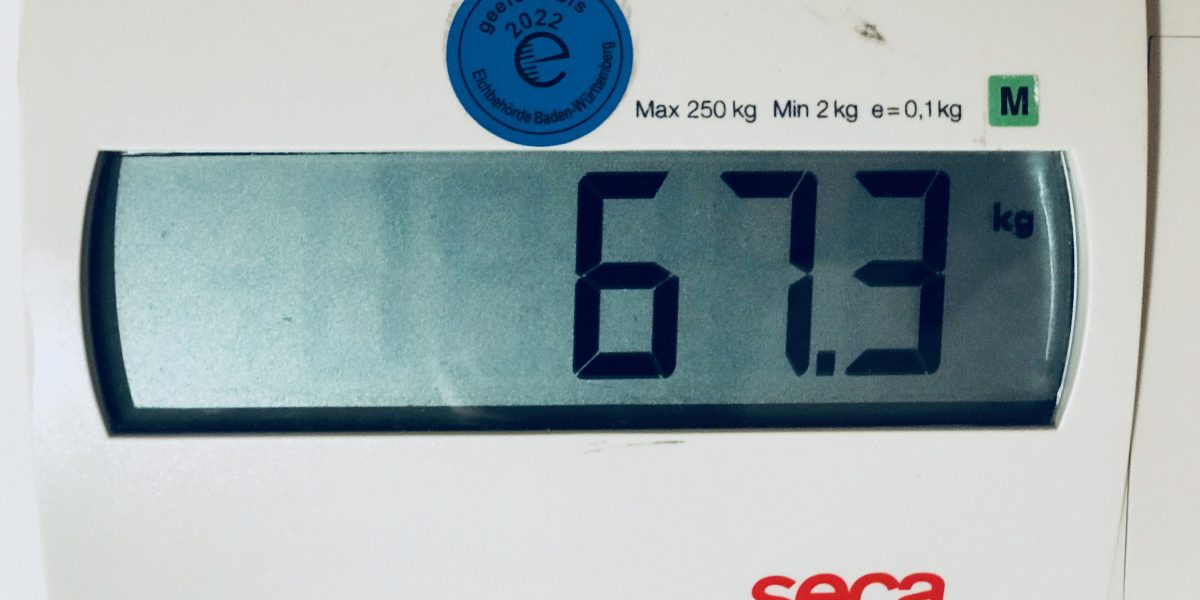
Getting here, my first weigh in with the nurse was at 161.7 lbs (73.5 kg) or BMI=23.2.  Today, I passed my weight during my senior year of high school which was 148 lbs (67.3kg) or BMI=21.

Still, I have a ways to go stabilize blood pressure and to get my fasting blood glucose down.  So, I need to keep sucking the liver out of my organs. This was expected, which is why I booked the clinic for 28 days!

Halfway through, I can write here that so far this is way easier than I thought it would be.  Let’s see how the second half of the fast goes!

Results from morning nurse visits on Days 9-11

  • Blood pressure: 122/78, 140/87, 119/83
  • Blood sugar: 102, 113, 118
  • Weight: 68.5kg (150.7 lb), 67.5kg (148.5 lb), 66.6kg (146.5 lb)

Filed Under: Buchinger-Wilhelmi, Fasting

Stocking up on Badriparan

September 2, 2018 By spao Leave a Comment

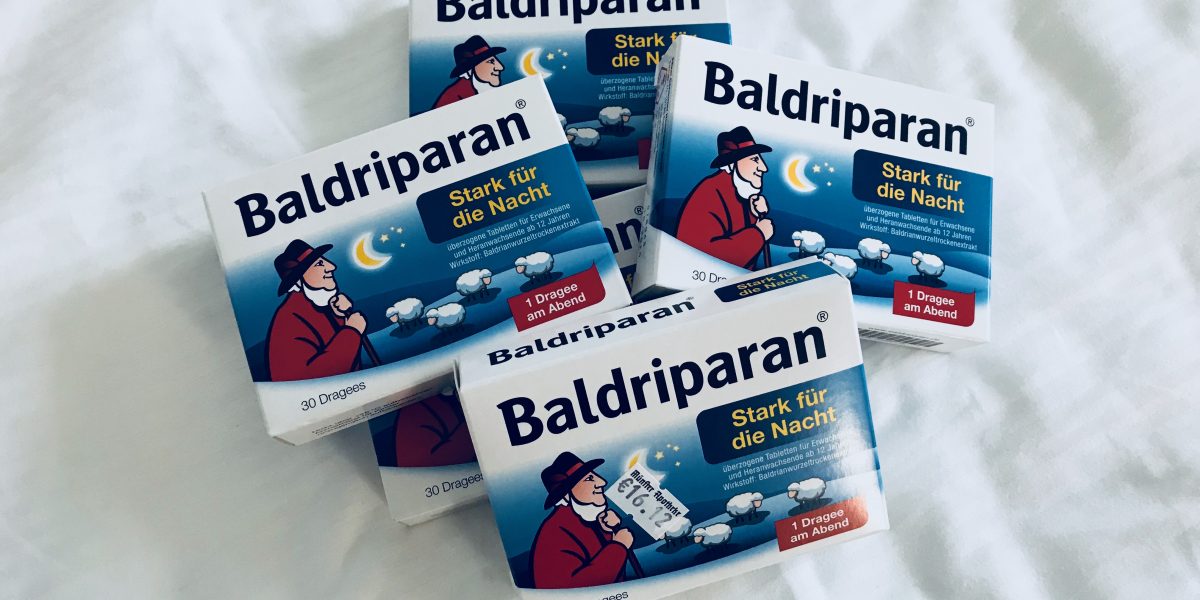
Baldriparan as a Sleep Aid while Fasting!

I am actually someone that almost never has a problem sleeping.  As such, I never knew about sleep aids before coming here.  Now, I’m a believer!

Fasting reduces your need to sleep

I’ve heard two different few theories on the why fasting reduces the need to sleep (and numerous more on the mechanisms which I won’t cover here):

  • It’s an evolutionary mechanism designed to allow you to hunt when you don’t have food

“From an evolutionary perspective, this makes sense,” [Matt] Thimgan says. “If you’re starving, you want to make sure you’re on the top of your game cognitively, to improve your chances of finding food rather than becoming food for someone else.” – Science Daily

  • You need less rest because you’re not digesting, which takes 10% of your energy by itself

In any case, I’ve been experiencing this personally and getting less sleep.

Sleeping less makes your body work harder

The nurse here didn’t like my lack of sleep because of my high blood pressure and asked that I take a natural sleeping aid to keep it down.  In her experience, sleeping less makes the body work harder and results in higher blood pressures.

I checked with the doctor, too.  She confirmed that the natural sleeping aid was not addictive, and also she echoed the recommendation.  She told me that the “old fasting doctors” used to just tell people to go on with less sleep, but this is changing.

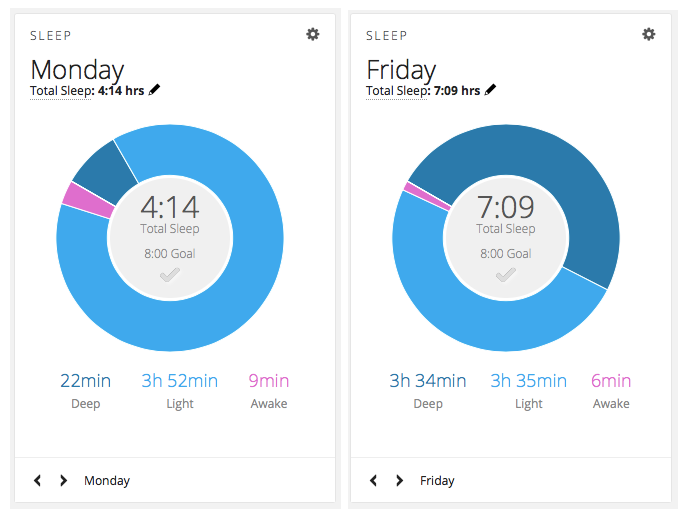
I have been using my Garmin watch to measure sleep.  Here are a couple of examples, both on a bad blood pressure day (Monday) without the sleeping aid, and on a good one (Friday) with the sleeping aid:

Deep Sleep Measurements on Garmin Watch

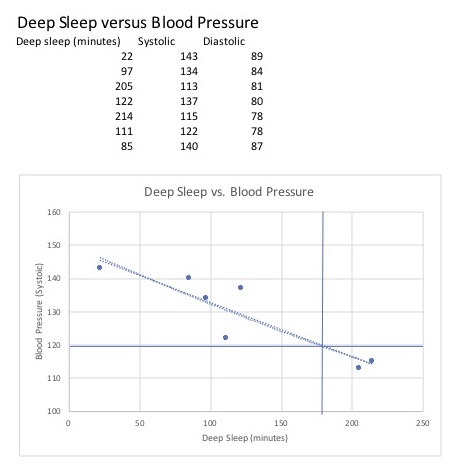
I have had varied nights following the recommended dosages and deviating from them, and my data does appear to support the assertion that more sleep (particularly “deep sleep” as measured by the Garmin) is associated with better blood pressure readings.

Deep Sleep versus Blood Pressure

By this, I should be targeting about 3 hours of deep sleep per night while fasting.

Baldirapan to the rescue!

So, what is this sleeping aid?  It’s called Baldiparan, derived from valerian root.  Valerian is a flower, and the remedy has been used since Ancient Greece.  The product is marketed here in Germany by Pfizer. It totally works for me!  My recommended dosage was:

  • one pill 1 hour before bed
  • one pill immediately before going to bed
  • one pill when I wake up prematurely.  This one is actually kind of tough.  Last night, I was too lazy to take the last pill in the middle of the night, tossed and turned, and then ended up waking up to work on the blog post — only to have a high blood pressure reading!

While there are other formulations of Valerian, this one by Pfizer doesn’t appear to be marketed in the US.  The clinic sells it for €16 for 30 pills.  I just bought a bunch at Mũller for under €12 for 30 pills.  I had to stock up because this particular formulation isn’t economical in the US!  (You can get other valerian root supplements, but I don’t know how effective they are!)

It’s a bit infuriating that Pfizer doesn’t market the same product in the US, but it’s clear that they’d rather sell patented drugs than natural products. That’s a topic for a different discussion.

The basic point here is that sleeping does appear to help get through fasting, and there are natural, non-addictive sleeping aids to help the fasting process along. I’m taking some home for future fasts, as well as any other time I can’t sleep. Just passing along the information!

Filed Under: Fasting, Featured

Start your day with autogenic training

September 1, 2018 By spao 1 Comment

Make autogenic training part of your daily routine

Buchinger Wilhelmi is about more than fasting.  Thirty years ago, they were practicing yoga, meditation, acupuncture, and other “alternative” therapies long before they hit the mainstream in the Western world.  The one I hadn’t heard of is autogenic training.

They have a basic routine that they’d like everyone to follow when waking up:

  1. say a “please” or “thank you” (avoiding the word “prayer” to be sensitive to all religions)
  2. exercise in some way, preferably per World Health organization exercise recommendations*
  3. take a contrast shower, i.e., start with hot water for about 3 minutes, then switch to cold water for a minute and repeat for 5-10 minutes.  This is based on the work of Sebastian Kneipp, a German priest credited for utilizing hydrotherapy in naturopathic medicine.
  4. spend 10 minutes performing autogenic training

Items #1 through #3 are pretty well known now.  However, this was the first exposure I had to #4 — autogenic training — which is really a self-hypnosis technique designed to help you relax, regulate body functions, and even clear your mind.  It was developed by a German psychiatrist J.H. Schultz.  Here at Buchinger, there are guided group sessions to introduce guests to the benefits, and I was hypnotized!  However, autogenic training is designed to be done on your own.

The concept is similar to meditation, but rather than clearing your mind, autogenic training is formulaic, with a sequenced progression, and it might be an easier introduction to those who have not practiced meditation.  I have personally thrown this into the mix since coming here!

You can do the autogenic training lying or seated.  It basically works through suggestions that you keep repeating to yourself, imagining a series of sensations until you actually feel them!

The suggestions I go through now are as follows:

  • “I am aware of my breathing, but I am not changing it.”
  • “As I focus on my breathing, it becomes calm and regular.  I am calm.”
  • “My arms and legs are heavy” / “My whole body is heavy”
  • “My arms and legs are warm” / “My whole body is warm”
  • “My solar plexus (abdomen) is warm”
  • “My heartbeat is calm and regular”
  • “My forehead is cool and fresh”

Note that traditional autogenic training focuses on breathing after the heartbeat, not at the beginning as I do.  However, I’ve found that my focusing on breathing first helps to “center” me.  Perhaps this is the training I’ve done in meditation that helps center the “monkey brain.”  I prefer it this way.

The concept is to start your day with autogenic training but come back to it if things get stressful during the day, or even when you need to relax before going to go to bed.

The Wikipedia article on autogenic training is actually pretty good if you want a reference.

Try it out and make it part of your daily routine!


* World Health Organization exercise recommendations

  1. Adults aged 18–64 should do at least 150 minutes of moderate-intensity aerobic physical activity throughout the week or do at least 75 minutes of vigorous-intensity aerobic physical activity throughout the week or an equivalent combination of moderate- and vigorous-intensity activity.
  2. Aerobic activity should be performed in bouts of at least 10 minutes duration.
  3. For additional health benefits, adults should increase their moderate-intensity aerobic physicalactivity to 300 minutes per week, or engage in 150 minutes of vigorous-intensity aerobic physical activity per week, or an equivalent combination of moderate- and vigorous-intensity activity.
  4. Muscle-strengthening activities should be done involving major muscle groups on 2 or more days a week.

Filed Under: Fasting, Featured

Umbrellas at Park Villa

August 31, 2018 By spao Leave a Comment

Days 7-8 – It’s like Seattle here…

Travel tip:  If you come to Buchinger Wilhelmi on Bodensee, make sure you depart before the end of August!

Weather definitely changes quickly here.

We went from perfect sunny resort weather to clouds and rain — like Seattle!  We’ve got this for the next few days.

Weather in Ueberlingen
Weather in Ûberlingen for the next few days

We had a little break from the rain today right now (4pm here), so I took a photo of what this place looks like with cloud cover.

Buchinger Wilhelmi on a Cloudy Day
Buchinger Wilhelmi on a cloudy day

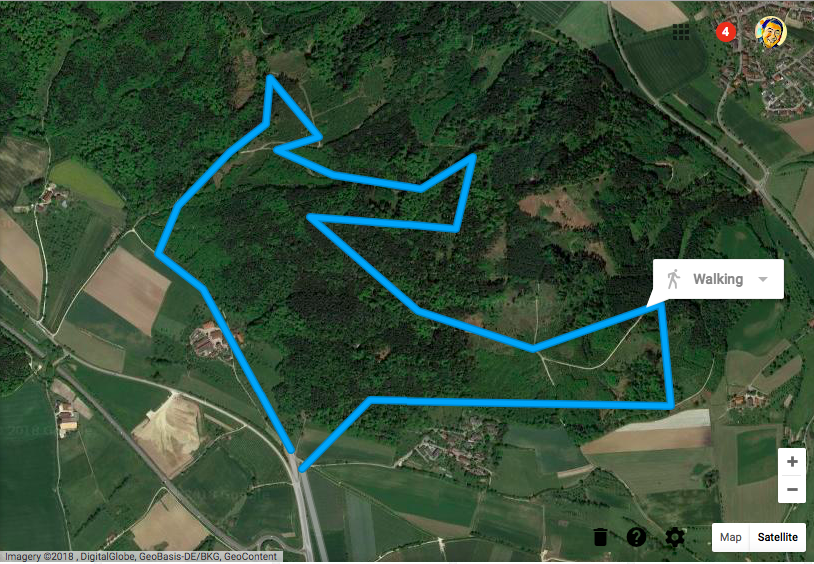
Fortunately, our morning walk today stayed on gravel roads to avoid the muddiness of the dirt trails, and we were provided umbrellas to take along with us.

The morning walk stayed on the gravel roads

And, even for the daily activities, Buchinger Wilhelmi handles the weather well with umbrellas at the entrance of every building.

Still, my wife and I agreed that if we ever came back, we’d schedule our trip two weeks earlier!

Results from morning nurse visits on Days 7-8

  • Blood pressure: 137/80, 115/78 – Still oscillating a bit!
  • Blood sugar: 106, 111 – Coming down!
  • Weight: 68.7kg (151.1b) , 68.4kg (150.5lb) – 300g per day is normal for fat burning

Filed Under: Buchinger-Wilhelmi, Fasting

Should you switch out a doctor you do not like?

August 30, 2018 By spao 1 Comment

Should you switch out a doctor you don’t like?

I have not had great historical success with doctors in the US in treating my diabetes.  My doctors have been too quick to insist on prescribing drugs that do not work over the long term for my situation, and they have not changed their views quickly enough to match as new data emerges.  Without exception, all of them warned me about the dangers of fasting without the time or the willingness to review the research.

Here at Buchinger-Wilhelmi, the doctors acknowledge that medicine is not a science but rather trial-and-error.  (For those interested, there’s a very good Freakonomics podcast series on this topic!)  My doctor here in Germany acknowledged that what she was originally taught (give diabetics frequent small meals per day) was wrong, which I knew to be true based on the progression of my own disease.  My German doctor and I even had a great conversation about Yoshinori Ohsumi, a 2016 Nobel Prize winner for his discovery of mechanisms for autophagy (self-reparation) in cells, triggered by fasting.  Upon getting here, I felt something with a doctor that I hadn’t felt in the past — a true willingness to engage in discussion rather than simply prescribing medicine or “standard of care.”

My experience in the US was not atypical. A study published in the Journal of General Internal Medicine found that:

On average, patients get about 11 seconds to explain the reasons for their visit before they are interrupted by their doctors.  Also, only one in three doctors provides their patients with adequate opportunity to describe their situation.

The commentary in the release associated with this study goes on to say:

“If done respectfully and with the patient’s best interest in mind, interruptions to the patient’s discourse may clarify or focus the conversation, and thus benefit patients,” she [Naykky Singh Ospina] agrees. “Yet, it seems rather unlikely that an interruption, even to clarify or focus, could be beneficial at the early stage in the encounter.”

Monday night, my wife and I attended a lecture here at Buchinger Wilhelmi on doctor-patient relationships.  Given that Buchinger Wilhelmi has a long history of utilizing alternative therapies for a worldwide audience that are not practiced in the guests’ home countries, they provide more formal instruction on this meaty topic.

It turns out there is rich history of medical ethics surrounding patient autonomy versus paternalism in making health care decisions, and the advocacy position that Buchinger takes here is that neither extreme is optimal.  The key is to have a relationship with your medical doctor.

This history stems back to Ancient Greece where priests and doctors were one in the same.  Challenges exist today because of the demands of the current healthcare system, so doctors (while many well-intentioned) are often under time pressure and have a tendency to “repair” rather than communicate.

Temptation Surplus Disorder
Credit: kevinspear.com

I walked away with several recommendations:

  • Ask questions that you have the right to ask.  For example, when prescribed a medicine, ask your doctor if they have actual clinical experience (and measured success) with the medicine over the long term.
  • Make sure your doctor is communicating with you in language you understand.  Too often doctors use very technical jargon to sound authoritative rather than to communicate to you in a way you can comprehend.  Force them to communicate.
  • Find something you like about your doctor.  The advocacy position here is that if you don’t like your doctor, or your doctor doesn’t like you, it simply won’t work at all.  To be fair to the doctor, initiate this on your own.  Even if you have to compliment your doctor on their apparel, try to break the ice in some way!

The advice: if you aren’t successful with these approaches, switch doctors!

From an interview with Giovanni Maio, German physician and professor of bioethics and medical ethics at the Albert-Ludwigs-Universität Freiburg:

Die Patienten haben doch eine große Macht, ich wundere mich immer, warum sie die nicht einsetzten. Sie können die Ärzte, die ihnen keine Zeit widmen, abstrafen. Einfach nicht mehr hingehen und einen anderen Arzt aufsuchen.

Translated from German:

The patients have a great power, I always wonder why they did not use them. You can penalize the doctors who do not devote time to them. Just do not go and see another doctor.

There’s the answer to the question from Germany.

Filed Under: Diabetes, Fasting

  • « Go to Previous Page
  • Page 1
  • Interim pages omitted …
  • Page 4
  • Page 5
  • Page 6
  • Page 7
  • Page 8
  • Go to Next Page »

Primary Sidebar

Recent Posts

  • Sharing the Good & Bad of Ozempic on Medium
  • Why I stopped taking Vitamin B supplements
  • What changes when you progress from chronic kidney disease stage 3B to stage 4?
  • Ozempic treats diabetes (but I didn’t lose weight!)
  • Glucose might not be the cause of Type 2 Diabetes

Archives

  • February 2025
  • December 2024
  • August 2024
  • November 2019
  • October 2019
  • June 2019
  • May 2019
  • December 2018
  • November 2018
  • September 2018
  • August 2018

Categories

  • Buchinger-Wilhelmi
  • Buchinger-Wilhelmi 2019
  • Chronic Kidney Disease
  • Diabetes
  • Fasting
  • Featured

Sign up for updates to Time-Restricted

Footer

Stephen Pao is the author of the Time-Restricted blog. Following a Type II diabetes diagnosis in 2003, Steve began experimenting with alternative approaches to managing the disease, including prolonged fasting as a complement to a low-carb lifestyle. Several years ago, Steve also added a more involved drug program, including Ozempic and Jardiance. By day, Steve is a consultant and board advisor to early stage technology companies. Steve and his wife are empty nesters, with two adult daughters.

Copyright © 2025 · Workstation Pro On Genesis Framework · WordPress · Log in