• Skip to main content
  • Skip to primary sidebar
  • Skip to footer
  • All Posts
  • Contact

Time Restricted

Experiences with Time-Restricted Eating and Managing Chronic Disease

Posts

February 6, 2025 By spao Leave a Comment

Sharing the Good & Bad of Ozempic on Medium

“You don’t have to be great to start, but you have to start to be great.”
—Zig Ziglar

While I normally write my health articles on this site, I have been considering submitting articles to Medium publications to hone my writing and grow my audience. To get started, I just needed to publish my first article on Medium. I had been putting that off, thinking I wanted to write the “right” article to start and to find the “right” publication. This is my first article of this sort in 2025, and I hadn’t made any moves toward this goal on Medium.

Today’s post for this site was going to be on how Ozempic has impacted my motivation to anything that isn’t habitual. How ironic! So, right before I hit “Publish” on this post, I decided to stop the presses at the last minute and publish it instead on Medium. Not ideal, but to heck with it.

I don’t intend to do this often. However, I also wanted to just get off my duff and take a first step to try something new. Would you support me in this?

If so, I humbly ask for three things:.

  1. Visit the Medium article for free using my friend link:
    https://pao.mx/medium001
    Note: if you have a paid Medium subscription, I would appreciate your accessing the article here:
    https://medium.com/@stevepao/the-good-complex-and-potential-bad-of-ozempic-f23ce6c8b79d

  2. If you have a Medium account (free or paid) and like the article, clap for me. You can clap up to 50 times. (If you don’t yet have a free Medium account, you can sign up with Google with a single-click and later turn off email notifications. I’ve done this myself.)

  3. Follow me. Don’t worry. My intent isn’t to spam you from Medium, too. (I will keep spamming the subscribers to time-restricted.com from here! 😜) I am just trying to communicate to other Medium publications that I do have at least some readers.

Thanks for the support. I hope you enjoy the article on Medium! Like I said, I’ll be continuing here, too. Also, if you haven’t seen my retirement blog, I am spending more time on Substack at retiredpdx.com.

Filed Under: Chronic Kidney Disease, Diabetes

Vitamin B increases vascular events

December 30, 2024 By spao Leave a Comment

Why I stopped taking Vitamin B supplements

“You can’t just take a vitamin and call it a day. If only health were that easy!”

There used to be a compelling movement to encourage people to take B-vitamin supplements to manage homocysteine levels. When I first got diagnosed with diabetes in 2003, I was a fan of the book The Heart Revolution: The Extraordinary Discovery That Finally Laid the Cholesterol Myth to Rest, which asserted that high homocysteine levels, not cholesterol, were much more strongly associated with cardiovascular incidents. The solution? Vitamin B supplementation (vitamins B6,  B12, and folic acid). However, there is more to this story.

Patients like me with diabetes and chronic kidney disease should monitor cardiovascular health. It is a major risk factor.

“Patients with diabetic kidney disease have exceptionally high rates of cardiovascular morbidity and mortality. In fact, the excess mortality among patients with diabetes appears to be largely limited to the subgroup with kidney disease and explained by their high burden of cardiovascular disease.”
— Pálsson & Patel, Cardiovascular Complications of Diabetic Kidney Disease

While I am currently on a statin (Rosuvastatin Calcium), I continue to believe the evidence about homocysteine versus cholesterol as a bigger risk factor for heart disease. I have written about some of the issues with our current standard of care regarding cholesterol monitoring, including the need to test for LDL pattern A versus pattern B and the growing belief that there is no evidence of high cholesterol levels causing heart disease, as referenced in my article about cheese. 

However, despite these beliefs, it’s not clear that vitamin B supplementation is the answer in my case. A study published in JAMA back in 2010 complicated the story. 

Among patients with diabetic nephropathy, high doses of B vitamins compared with placebo resulted in a greater decrease in GFR and an increase in vascular events.

What? So the evidence suggests that Vitamin B supplementation hurts, not helps, the situation!

In the past, most of my reading suggested that vitamin supplementation in general may not help that much and that what we’re probably buying is just expensive urine. I was sort of OK with that tradeoff on the chance that the vitamins didn’t hurt but could help. However, with evidence that vitamin B supplementation actually hurts people in my situation, I have stopped taking vitamin B supplements altogether!

Filed Under: Chronic Kidney Disease, Diabetes

Stages of CKD

August 22, 2024 By spao Leave a Comment

What changes when you progress from chronic kidney disease stage 3B to stage 4?

The stages of chronic kidney disease (CKD) are defined by ranges of eGFR, a calculated number based on serum (blood) creatinine test results. Of course, the progression of CKD is continuous, but certain healthcare protocols are set based on the discrete stages of CKD, particularly at stage 4 when eGFR drops below 30.  In this post, I’ll describe three protocols that affected me personally.

  • COVID-19 antivirals.  Back when I was at stage 3B, I got COVID-19 and got a dosage adjustment for Paxlovid for “moderate renal impairment.”  I experienced only very mild symptoms with Paxlovid and did not experience a “Paxlovid rebound.”

    Paxlovid Dosage Adjustments
    Paxlovid Dosage Adjustments

    Source: Pfizer

    Once, I crossed into Stage 4 CKD, I could no longer be prescribed Paxlovid.  My option instead was Lagevrio (molnupiravir).  Lagevrio was recommended by my nephrologist because it has been shown to be safe and effective for patients with advanced chronic kidney impairment.  Personally, I started testing negative 5 days after starting Lagevrio treatment.

  • Cortisone shots instead of NSAIDs for gout attacks.  When I got my first gout attack, I was prescribed Indomethacin (an NSAID) for my gout pain.  It worked fine, and I did get some immediate relief with the strict warning not to take higher doses or partake in long-term use given my CKD.  Once I crossed into stage 4, I was advised to completely avoid Indomethacin. For my last gout flare-up, I was given a cortisone shot, and it provided immediate relief.  (Note that I was warned as a diabetic that my blood sugar would temporarily go up as the result of the cortisone shot!)

Later, I was prescribed allopurinol to reduce the risk of future gout flare-ups.  I have not yet had another flare-up since getting on this drug.

  • No more metformin.  As my CKD has progressed, my doctors have been weaning me off Metformin (from 2000 mg to 1000 mg to 500 mg to nothing) while increasing the Ozempic.  Right now, with stage 4 CKD, I am completely off metformin, consistent with recommendations (see below). My A1C is stable, with the Ozempic and Jardiance keeping my A1C under control.

    CKD and Metformin
    CKD and Metformin

    Source: PubMed

By no means is this list complete.  They are just the immediate impacts that affected me once the stage designation officially changed for me.

Are there others that you have experienced?

Filed Under: Chronic Kidney Disease, Diabetes

Ozempic

August 18, 2024 By spao Leave a Comment

Ozempic treats diabetes (but I didn’t lose weight!)

I started this blog six years ago to document my journey with Type 2 diabetes and fasting.  I took a bit of a break from the blogging since 2019 when my fasting doctor told me that despite doing “everything right” on that program, that my case of diabetes was likely too advanced to solve with fasting alone.  I wanted to update readers with this post just to provide an update on how everything has been going.

For other health reasons (e.g., mitochondrial function), I am still a fan of fasting, but the fasting itself didn’t really halt the progression of my disease. For context, my Type 2 diabetes, high cholesterol, and high blood pressure have progressed to the level where I now have Chronic Kidney Disease (CKD) and gout. To stem further progression, I have been on a more advanced drug program for the past several years.

Unlike my previous attempts with drugs, my A1C has been stable (between 6.3 and 6.6) since then. My whole drug program for the diabetes, CKD, high cholesterol, high blood pressure, and gout are:

  • Ozempic 1mg (for diabetes – $788.46 / mo)
  • Jardiance 25mg (for CKD and diabetes – $417.34 / mo)
  • Rosuvastatin Calcium 25mg (for high cholesterol – $0 copay / mo)
  • Losartan Potassium 100mg (for high blood pressure – $2.00 / mo)
  • Allipurinol 100mg (for gout – $10.85 / mo)

The Ozempic really did prove to be a miracle drug in that it was the first drug for me that had the efficacy of sufficiently lowering A1C without the resultant lethargy, tiredness, and weakness.  Of course, I also didn’t really get the benefit that Hollywood actors and fashion models get with the weight loss on Ozempic, but its impact on lowering my A1C and keeping my blood glucose under control have seemed to slow the progression of the disease.

My drug program now is significantly higher in cost than when Healthline covered my case in 2018.  With my insurance out-of-pocket maximum at $7,500, I now regularly hit the out-of-pocket maximum on drugs alone, so the doctor visits are now effectively “free.”  Instead of about $200 / month as cited six years ago, my monthly cost is now $625 per month ($7500 / 12) on top of the insurance premiums I would pay anyway.  My insurance also covers the costs of all the diabetes test strips thanks to Livongo.

I remain a fan of natural health, but in my case, there has also been room for Western Medicine.  The one question I have in my mind is whether Ozempic has an impact on mental health.  Overall, I’ve found that I have lost some motivation overall, and in this case to write blogs!

Are any of you on a similar program now?

Filed Under: Diabetes

Glucose may not be the cause of Type 2 Diabetes

November 4, 2019 By spao 4 Comments

Glucose might not be the cause of Type 2 Diabetes

There has been a long-standing belief that consuming too much sugar was the cause of Type 2 diabetes and that treating diabetes was about controlling blood sugar.  Makes sense, right?  Well, it’s more complicated.

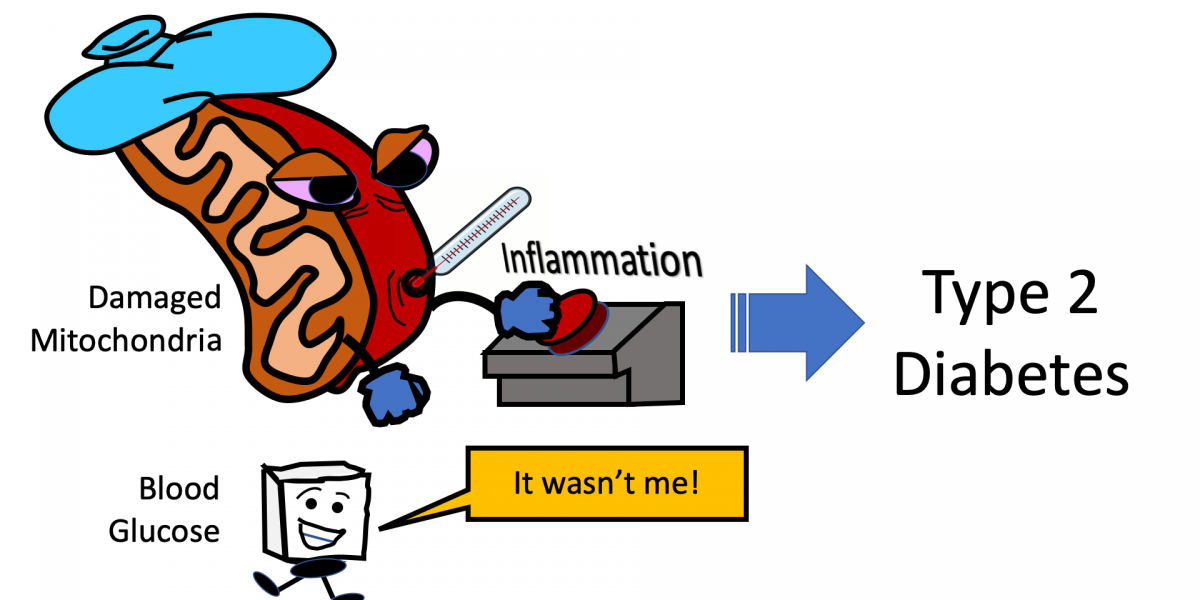
Recent research has now provided evidence that mitochondrial dysfunction (previously covered on this blog) — involving fats, not glucose — may be to blame for the inflammation which causes type 2 diabetes!

Warning: In no means does this post advocate any stoppage of treatment for blood glucose control.  The recent research just reveals that there is more to the story.

Inflammation and Type 2 Diabetes

For context, it has long been demonstrated that there is an association between inflammation and the onset of Type 2 diabetes.  A 2001 study published in JAMA stated the following:

Our epidemiological observations, coupled with emerging experimental evidence, support a possible role for inflammation in the pathogenesis of type 2 DM. Our data also raise the possibility that inflammatory markers, like CRP, might provide an adjunctive method for early detection of risk for this disease.

As research progressed, refined conclusions made their way from research publications into the popular press.  A Scientific American article from 2009 described this phenomenon:

Researchers have since shown that TNF-alpha—and, more generally, inflammation—activates and increases the expression of several proteins that suppress insulin-signaling pathways, making the human body less responsive to insulin and increasing the risk for insulin resistance.

This phenomenon was summed up well in a review of a 2014 study where the editor of the Journal of Leukocyte Biology wrote:

The more researchers learn about obesity and type 2 diabetes, the more it appears that inflammation plays a critical role in the progression and severity of these conditions.

The real question then was what causes the damaging inflammation?

Understanding the Cause of the Inflammation

It has been assumed that high blood sugar levels were to blame for this inflammation in diabetic patients and that achieving healthier blood sugar levels was the key to reducing inflammation.  However, the recent study cited earlier challenges this assumption.

With the initial assumption that glucose caused the inflammation, the researchers Barbara Nikolajczyk from University of Kentucky and Douglas Lauffenberger from MIT hypothesized that immune cells from patients with type 2 diabetes would produce energy by burning glucose.  The team was surprised to find that glycolysis, a reaction involving glucose for other types of inflammation, was not driving chronic inflammation in diabetic patients. Instead, a combination of defects in mitochondria and elevated fat derivatives were responsible.

Solving a Long-Known Mystery

One long-known mystery in diabetes control emanated from the ACCORD (Action to Control Cardiovascular Risk in Diabetes) study back in 2008.   It compared intensive therapy (HbA1C levels below 6.0%, similar to a non-diabetic patient) with standard therapy (HbA1C levels between 7.0% and 7.9%). The conclusion was surprising in that mortality rates increased with tighter blood glucose control.

As compared with standard therapy, the use of intensive therapy to target normal glycated hemoglobin levels for 3.5 years increased mortality and did not significantly reduce major cardiovascular events. These findings identify a previously unrecognized harm of intensive glucose lowering in high-risk patients with type 2 diabetes.

This increase in mortality ultimately resulted in the early halting of the glucose-control arm of the ACCORD trial.

A follow-on study to ACCORD (ACCORDION) invited all surviving ACCORD participants who were later treated according to their health care provider’s judgement.   Once their data was collected, the study revealed that the period of intensive treatment during ACCORD did not help in the long-run.

In high-risk people with type 2 diabetes monitored for 9 years, a mean of 3.7 years of intensive glycemic control had a neutral effect on death and nonfatal cardiovascular events but increased cardiovascular-related death.

While there was well-documented analysis on ACCORD and ACCORDION, there remained a mystery of exactly why lowering blood glucose back to normal levels didn’t produce the desired effects.  This latest study may begin to unravel some of the mystery.

As noted by the study authors…

“Our data provide an explanation for why people with tight glucose control can nonetheless have disease progression.” – Barbara Nikolajczyk, Ph.D, UK Barnstable Brown Diabetes Center https://t.co/RPNh0wY7PT

— UK HealthCare (@UK_HealthCare) August 31, 2019

Filed Under: Diabetes

Steve Pao on PopHealth Episode 206

October 26, 2019 By spao Leave a Comment

Steve Pao on #PopHealth podcast

Fasting, diabetes, and innovations in health were just some of the topics I covered during my visit on the #PopHealth podcast titled “Personal and Organizational Well-being.”

Here are the links to the podcast on the various platforms:

  • SoundCloud
  • Apple Podcasts
  • Spotify
  • Google Podcasts
  • Stitcher

For those who haven’t listened to the #PopHealth show before, here is the description:

This show is about all things population health. What is population health? It is about making populations and groups healthy. If you are someone who feels accountable or responsible for other people and their health- this show is for you.

Personal Well-Being

Here are some of the references I made during the podcast.

  • Should you switch out a doctor you don’t like?
  • TOFI – Thin on the outside, Fat on the inside
  • Yes to fasting, no to drugs
  • Mitochondrial Dysfunction & Natural Healing
  • Gut bacteria and Type II Diabetes
  • FYI – Blood sugar can RISE immediately after exercise

Also, I reference Mark Sisson’s Mark Daily’s Apple blog.

  • A Case Against Cardio (from a Former Mileage King)
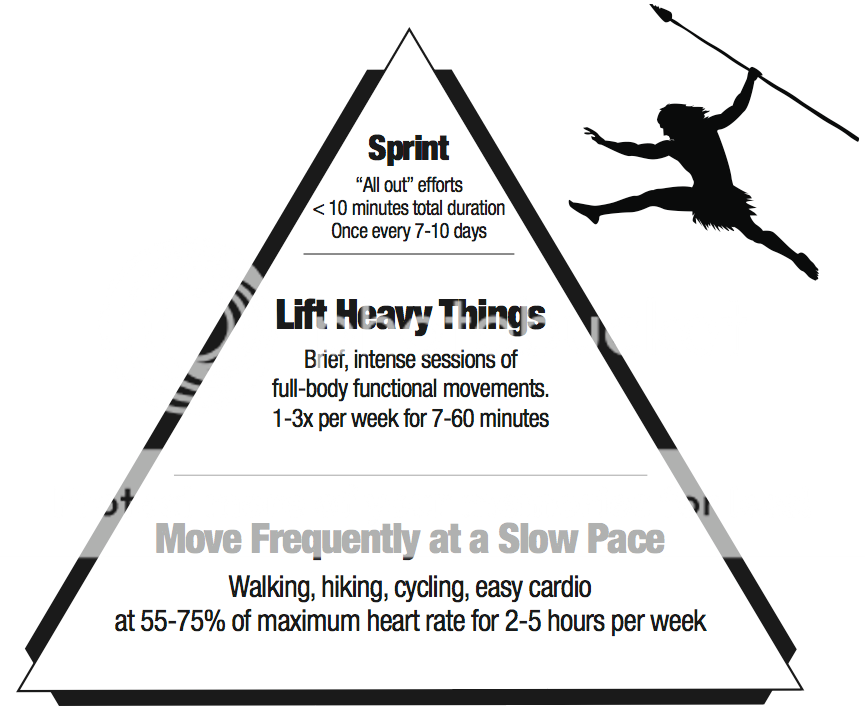
  • Facing the Primal Blueprint Fitness Challenges

    Primal Fitness Pyramid from marksdailyapple.com
    Primal Fitness Pyramid from marksdailyapple.com

Organizational Well-Being

As the podcast shifted to business, I discussed how  I named my own consulting practice (Hillwork, LLC) for early-stage technology companies after the concept in training workouts for improving performance.

The analogy to “hillwork” in business is the exercise of finding product-market where the 1990’s version of this was chronicled in  “Crossing the Chasm”, a classic book of the time by Geoffrey Moore.

Some of the companies I mentioned about using technology to improve outcomes were:

  • Otonexus – featuring an air-coupled ultrasound device to detect ear infections
  • Light Line Medical – featuring use of visible light (not drugs or chemicals!) to kill bacteria in catheters
  • Pixamed – extending cloud and mobile to electronic medical records systems beyond big hospitals but to clinics and skilled nursing facilities
  • Health Hero – a platform focused on using software to improve patient follow-up and improve outcomes

Here’s also the contact information he asked for:

  • Hillwork, LLC Web site
  • @steve_pao Twitter
  • Steve Pao on LinkedIn

Overall, thanks to Anthony Diaz to having me on the show!

Filed Under: Diabetes, Fasting

  • Page 1
  • Page 2
  • Page 3
  • Interim pages omitted …
  • Page 8
  • Go to Next Page »

Primary Sidebar

Recent Posts

  • Sharing the Good & Bad of Ozempic on Medium
  • Why I stopped taking Vitamin B supplements
  • What changes when you progress from chronic kidney disease stage 3B to stage 4?
  • Ozempic treats diabetes (but I didn’t lose weight!)
  • Glucose might not be the cause of Type 2 Diabetes

Archives

  • February 2025
  • December 2024
  • August 2024
  • November 2019
  • October 2019
  • June 2019
  • May 2019
  • December 2018
  • November 2018
  • September 2018
  • August 2018

Categories

  • Buchinger-Wilhelmi
  • Buchinger-Wilhelmi 2019
  • Chronic Kidney Disease
  • Diabetes
  • Fasting
  • Featured

Sign up for updates to Time-Restricted

Footer

Stephen Pao is the author of the Time-Restricted blog. Following a Type II diabetes diagnosis in 2003, Steve began experimenting with alternative approaches to managing the disease, including prolonged fasting as a complement to a low-carb lifestyle. Several years ago, Steve also added a more involved drug program, including Ozempic and Jardiance. By day, Steve is a consultant and board advisor to early stage technology companies. Steve and his wife are empty nesters, with two adult daughters.

Copyright © 2025 · Workstation Pro On Genesis Framework · WordPress · Log in